Georgia tree removal and trimming leads, exclusive to your crew.
In a state where no licence separates one tree company from the next, the homeowner decides on the call. We deliver exclusive Georgia homeowner leads for removals, trimming, and storm cleanup straight to your pipeline, so yours is the only call they take.
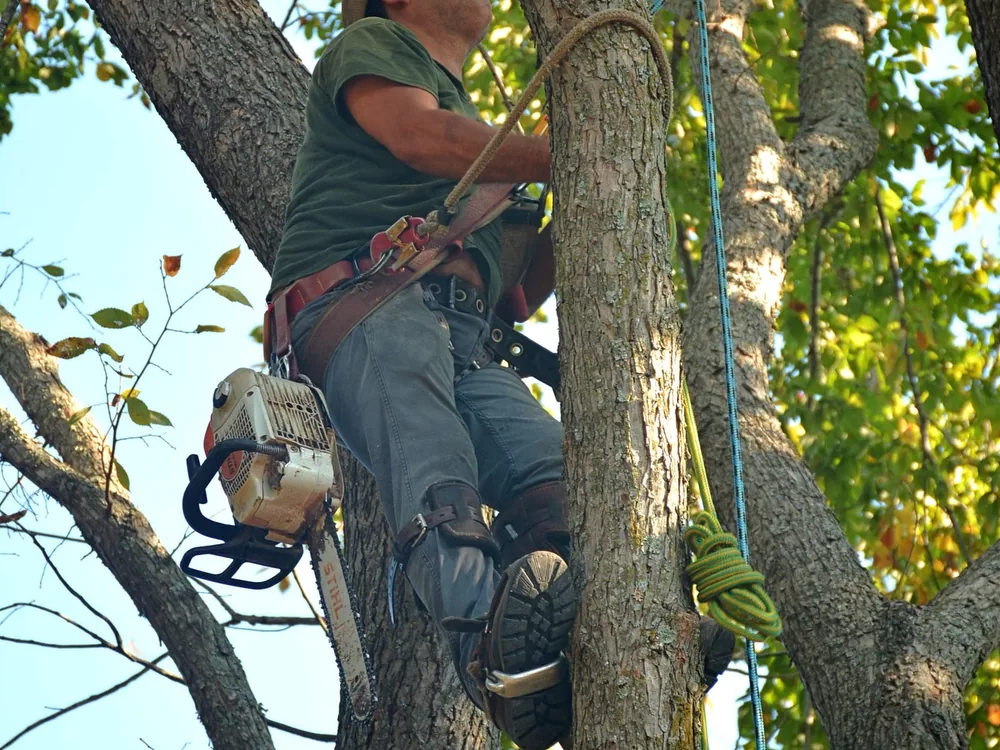
More canopy, more storms, and no licence to hide behind
Georgia has about 24 million acres of forest land covering roughly two-thirds of the state, ranking it among the top ten US states for forest coverage, according to Georgia Tree Authority's canopy management overview. That canopy is the whole market. It sits over driveways, roofs, power drops and fence lines across every suburb and small town in the state, and it needs work whether or not a storm has just come through.
Storm weeks arrive on a schedule
The National Weather Service forecast area covering north and central Georgia recorded 38 tornadoes in 2008, 34 in 2009 and 32 in 2011, its three highest annual totals, per NWS Peachtree City tornado counts. Wind speed is only half of it: dense, unpruned canopies act like sails in high winds, which is what turns one storm into weeks of removal work, as Georgia Tree Company explains. Those are the weeks your phone rings on its own, and the weeks a shared lead is worthless because five crews got it at once.
The same trees fail every time
In metro Atlanta, water oaks, tall pines and Bradford pears are the most frequent storm casualties, particularly when soil is already saturated and canopy is dense, per Trees Atlanta's storm aftermath guidance. Homeowners with those species are the preventative-removal market you can sell to long before the wind arrives.
Nothing sorts you from the cheap guy
Georgia does not license or certify arborists at the state level, and ISA certification is a voluntary industry credential, not a state licence, according to the Georgia Forestry Commission. A homeowner has no registry to check.
That last point is the one that changes how leads should be bought in this state. Because Georgia sets no licensing bar, homeowners cannot use a licence to tell operators apart, so trust is established on the call. Everything you rely on to win work, your insurance, your safety record, your crew's experience taking a water oak off a roof, only reaches the homeowner if you get a real conversation. That makes being the only company a homeowner speaks to worth far more than being one of five. A shared lead in Georgia is not just a worse lead; it drops you into a comparison where the only visible variable is price, precisely because the state has given the homeowner nothing else to compare on.
The same system, pointed at a storm-and-canopy market
The process is the one every Closer Growth client gets, set out step by step on our tree service page: property data to find likely homeowners, direct outreach, a qualification call, and delivery to one company. What changes in Georgia is what comes back.
After a storm line, the replies are hazard removals: a water oak leaning on a roof, a pine across a driveway. Between storms they are the work Georgia’s canopy creates on its own, trimming over roofs and service drops, and the Bradford pear a homeowner has been watching since the last high wind. Outreach runs through both, so delivery does not stop when the forecast clears.
What a qualified Georgia tree service lead looks like
Every Georgia homeowner goes through the qualification conversation before reaching you. For a Georgia crew, a qualified lead means:
- The tree is on the homeowner’s own property: not a renter, and not a neighbor complaining about a limb over the fence
- The property sits inside the ZIP codes you actually run, whether that is the northern Atlanta suburbs, Savannah and the coast, or Macon and Columbus
- The job as the homeowner describes it, removal, trimming, storm damage or lot clearing, with the species noted when they know it, because a water oak over a roof rigs differently from a pine in open ground
- Urgency captured, so a tree on a house after a storm line reaches you flagged ahead of a planned trim
- Delivered to you alone. In a state with no arborist licence, being the only company on the call is the advantage
What the canopy and the storms add up to in Georgia
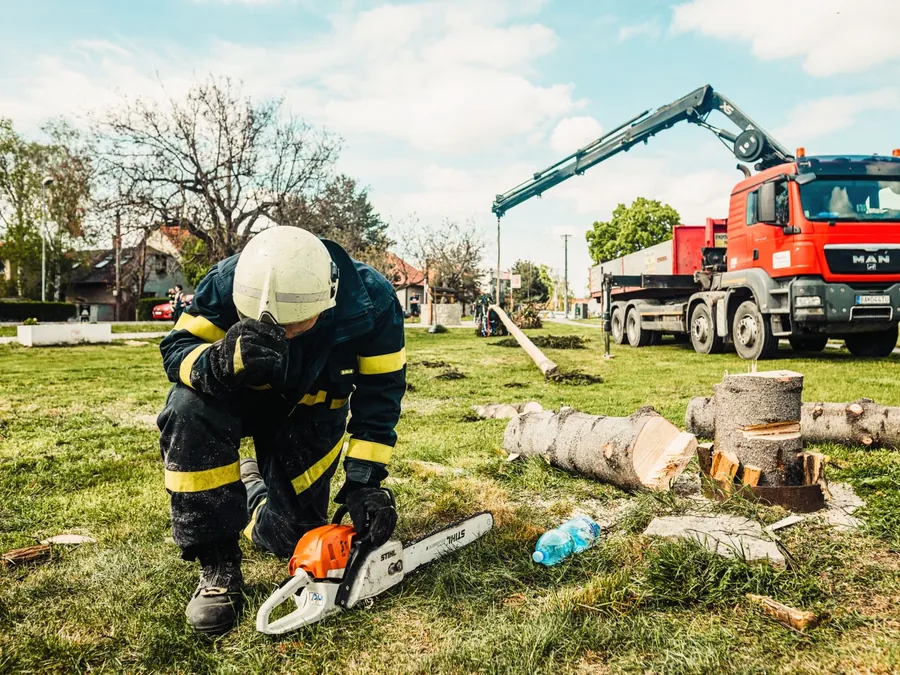
When Hurricane Helene crossed Georgia in 2024, with winds up to 100 miles per hour from Valdosta to Augusta, it traversed 8.9 million acres of forestland and did $1.28 billion of damage to the state’s timber resource, according to the Georgia Forestry Commission’s damage assessment. The same path ran through the towns and suburbs in between, which is what storm-season demand looks like in this state.
Share of the City of Atlanta covered by tree canopy in 2023, per Trees Atlanta’s report on the city’s urban tree canopy study. Nearly half the capital sits under trees that will need trimming, and eventually removal.
What leads cost by channel, nationally, is on our sourced lead generation benchmarks page. We also cover tree service leads in Texas and Michigan.
Exclusive leads vs. shared lead platforms
The real difference isn't the price per lead, it's what you actually pay per booked job.
| Shared lead platforms | Closer Growth | |
|---|---|---|
| Lead exclusivity | Sold to multiple companies | One homeowner, one contractor |
| Typical close rate | 3–5% | 40–60% |
| Real cost per booked job (example) | $750 | $160 |
| Contract required | Varies by provider | No retainers, no lock-in |
| Bad-lead replacement | Varies by provider | Free, guaranteed |
| Trial before you commit | Varies by provider | Low-cost 3-day trial |
Common questions from Georgia tree service companies
Do you cover all of Georgia or only metro Atlanta?
Coverage is not metro-limited. We lock service areas by ZIP code, so a crew running the northern suburbs of Atlanta, a company working Savannah and the coast, and an operator covering Macon or Columbus each get leads inside the radius their trucks actually run. Nothing overlaps between clients in the same territory.
Georgia does not license arborists. Does that change how leads should be handled?
It changes everything about the first call. Georgia does not license or certify arborists at the state level, and ISA certification is a voluntary industry credential rather than a state licence, so a homeowner cannot sort operators by looking up a licence number. Trust gets established on the phone instead. That is exactly why being the only company a homeowner speaks to is worth far more in Georgia than being one of five quotes.
Can you handle the volume spike after a North Georgia storm?
Yes, and we size delivery to your crew capacity rather than flooding you. North and central Georgia see storm surges every year, with the National Weather Service forecast area covering the region recording as many as 38 tornadoes in a single year, so surge weeks are a normal part of the calendar. We flag urgency on every lead so your dispatcher can triage hazard work ahead of planned jobs instead of treating everything as an emergency.
Are these leads exclusive?
Yes. Each homeowner lead goes to one Georgia tree service company only, and client territories never overlap.
What if a lead is bad?
Wrong numbers and no-genuine-interest responses are replaced free.
How much do tree service leads cost in Georgia?
Pricing depends on your market and the volume you want delivered per week or month, so we walk through real numbers on a call rather than quoting a flat rate here. Every relationship starts with the low-cost 3-day trial, so you see your own cost per booked job before committing to a larger package.
See the Georgia tree service leads before you commit.
Start with a low-cost 3-day trial. Consistent tree service leads across Georgia, exclusive to you, delivered straight to your pipeline.
Start your 3-day trial