Michigan tree removal and trimming leads, backed by a standing dead-ash backlog.
Storm weeks book themselves, and then the phone goes quiet. Michigan has something most states do not: removal work that has nothing to do with the forecast. We deliver exclusive Michigan homeowner leads for ash removals, trimming, and storm cleanup all year.
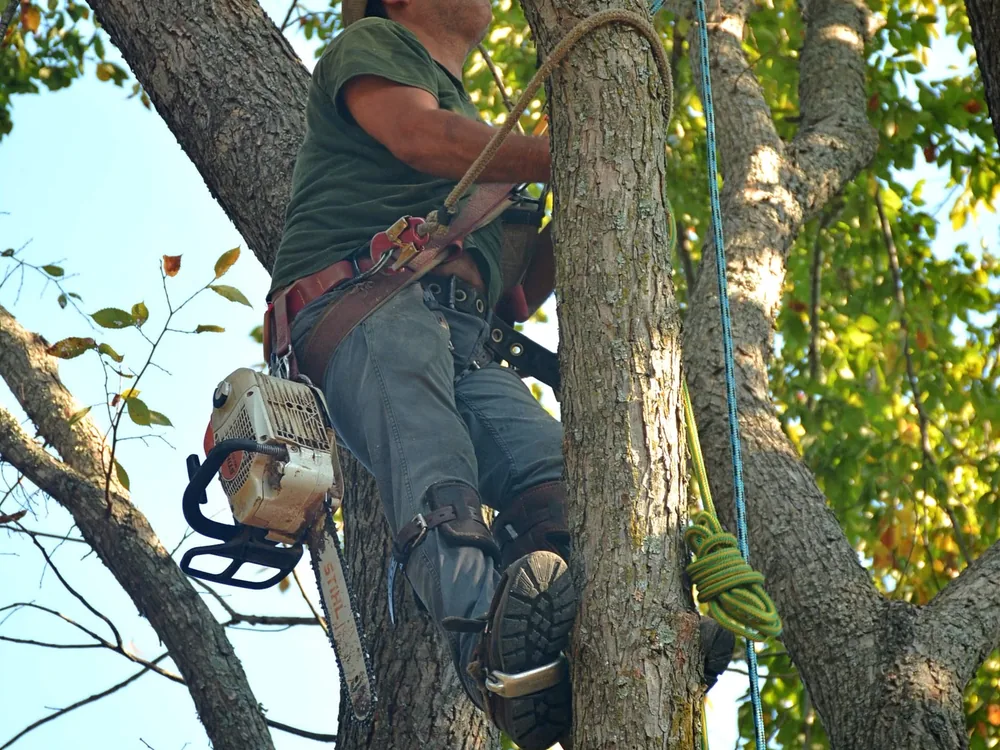
An insect changed the shape of this market, and it has not changed back
Most tree markets are weather markets. Work arrives when something falls, and the rest of the year crews and chipper trucks still have to be paid. Michigan is different, and the difference is not the winters. The emerald ash borer has killed tens of millions of trees across Michigan, having first appeared in the state around 2002, per Brawner's Tree Service on EAB recovery in Michigan. Two decades on, that leaves a backlog of standing dead wood that still has to come down, one property at a time.
Brittle wood fails faster than anything else
Dead ash becomes extremely brittle and hazardous far faster than other species, creating a high risk of branch drop onto homes and power lines, per Brawner's on hazardous dead ash. That is a homeowner problem with a deadline attached, and it is a rigging job rather than a routine takedown.
The trigger is the tree, not the calendar
For ash specifically, timing is driven less by season than by the tree's structural condition. Dead ash deteriorates rapidly and gets more dangerous and more difficult to remove the longer it stands, which means these inquiries surface in February and in July alike, on the tree's schedule rather than the weather's.
Weakened trees fail under Michigan loads
Saturated Michigan soils combined with heavy ice loads accelerate the failure of EAB-weakened trees, per Ivan's Tree Services on Michigan storm damage. The dead ash inventory and the storm season are not separate markets; the first one loads the second.
Two things follow from that, and both change how a Michigan operator should buy leads. The first is about volume. The emerald ash borer produces standing removal work that does not depend on the weather at all, a backlog of dead ash that has to come down eventually, and that backlog is steadier than storm work. A Michigan crew does not have to survive on event weeks the way a crew in a pure storm market does, provided the lead source is actually working the quiet weeks instead of waiting for the next warning to go out.
The second is about trust, and it is the more expensive of the two to get wrong. After a major storm in Oakland County, demand for emergency tree work spikes hard and out-of-town "storm chaser" crews show up in neighbourhoods looking for quick work, per Ivan's on Oakland County emergency removal. Michigan homeowners have learned this pattern. Their hesitation is not really about price, it is about whether the company in the driveway will still exist in a month and whether anyone is accountable if the removal goes wrong. That makes a homeowner's trust problem specifically about who is local and accountable, which in turn makes being the only local company they speak to worth far more than being one of five quotes. A shared lead drops you into a lineup where a storm chaser's number looks the same as yours on a screen.
From Michigan removal call to your calendar, in four steps
We map your Michigan service radius
Using property data, we identify homeowners in your Michigan ZIP codes with mature trees, standing ash, and properties that fit the profile for removals, trimming, and preventative work.
Outreach reaches homeowners first
Our outreach reaches these homeowners directly. Responses range from urgent hazard removals after an ice or wind event to the dead ash by the garage a homeowner has been putting off for two seasons.
A verified request becomes your lead
Every positive response is qualified and passed to you exclusively. One lead, one Michigan tree company. You are the first and only local crew calling about that tree.
Delivery fills the quiet weeks too
Choose a weekly or monthly package sized to your crew capacity. Start with a low-cost 3-day trial and judge lead quality before committing.
What a qualified Michigan tree service lead looks like
Before any homeowner reaches your pipeline, they pass through our qualification conversation. For Michigan tree service companies, that means:
- A verified homeowner with trees on their own property, not a neighbor complaint or a renter
- A property inside the Michigan ZIP codes your crews actually cover, metro Detroit, west Michigan, mid-Michigan or up north
- A real job: removal, trimming, storm damage, dead or declining ash, or lot clearing, noted before handoff
- Species flagged where the homeowner identifies it, so a brittle dead ash is not quoted like a healthy maple
- Urgency level captured, so hazard jobs reach you flagged and fast in the days after an ice or wind event
- Delivered to you exclusively, so you are not racing four other trucks, including two from out of state, to the driveway
"One large removal covers a month of leads. Steady flow is what keeps a three-man crew and a chipper truck paid between storms."
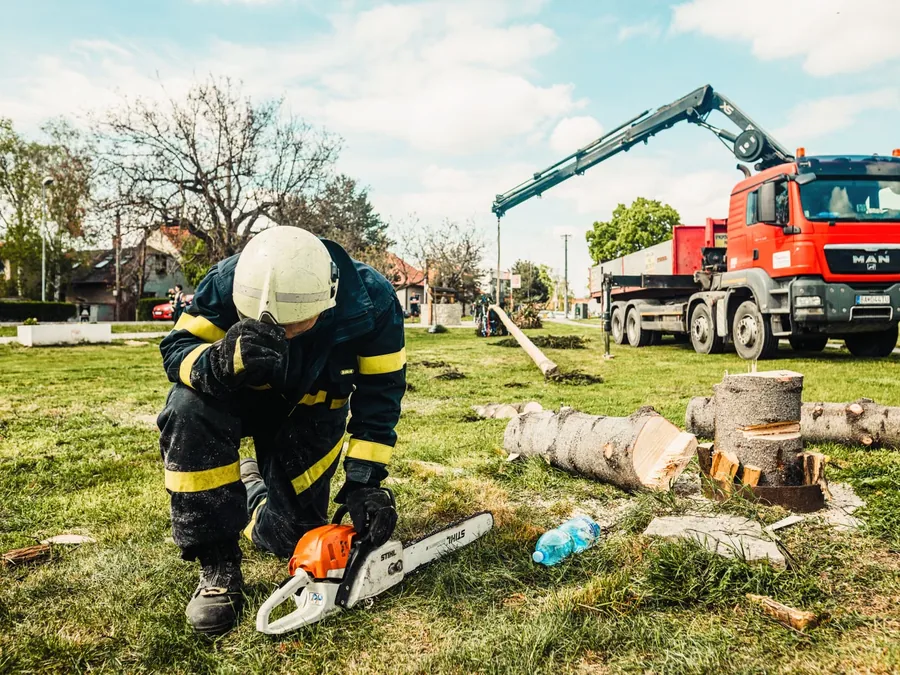
What tree service leads cost, and what storm work is really worth
An exclusive tree service call runs $40 to $100, and a shared one runs under $60, per Tree Traction's 2026 cost-per-lead benchmarks. Cost varies sharply by channel: Google Local Service Ads ($35–$85), Google Search Ads ($45–$85), Facebook and Instagram ($25–$45), and direct mail ($50–$85).
The standard-rate multiple storm and emergency tree work commands once crane work, structural damage, or night response is involved, per ArboStar's emergency tree removal pricing guide.
Exclusive leads vs. shared lead platforms
The real difference isn't the price per lead, it's what you actually pay per booked job.
| Shared lead platforms | Closer Growth | |
|---|---|---|
| Lead exclusivity | Sold to multiple companies | One homeowner, one contractor |
| Typical close rate | 3–5% | 40–60% |
| Real cost per booked job (example) | $750 | $160 |
| Contract required | Varies by provider | No retainers, no lock-in |
| Bad-lead replacement | Varies by provider | Free, guaranteed |
| Trial before you commit | Varies by provider | Low-cost 3-day trial |
Common questions from Michigan tree service companies
Are ash removal inquiries flagged separately?
Yes. When a homeowner describes a dead or declining ash, that is noted on the lead before handoff, because it changes how you quote and how fast you need to move. The emerald ash borer has killed tens of millions of trees across Michigan, having first appeared in the state around 2002, so dead ash is one of the most common removal conversations in the state. Knowing it is an ash before you pick up the phone lets your estimator plan for brittle wood and a rigging job rather than a routine takedown.
Do ash removal leads only come in during a particular season?
No, and that is the useful part. For ash specifically, timing is driven less by season than by the tree's structural condition. Dead ash deteriorates rapidly and gets more dangerous and more difficult to remove the longer it stands, so the homeowner's trigger is the state of the tree rather than the calendar. That produces removal inquiries in February and in July, which is why Michigan delivery does not collapse between weather events the way a purely storm-driven channel does.
Can you keep up after a major storm in Oakland County?
Yes, and delivery is sized to your crew capacity rather than dumped on you. After a major storm in Oakland County, demand for emergency tree work spikes hard and out-of-town storm chaser crews show up in neighbourhoods looking for quick work. Urgency is flagged on every lead so your dispatcher can triage hazard jobs first, and because the lead is exclusive you are not arriving third behind two trucks with out-of-state plates.
Do you cover the whole state or only metro Detroit?
The whole state, by ZIP code. Service areas are locked to the ZIP codes your crews actually cover, whether that is Oakland and Macomb counties, the west side around Grand Rapids and Kalamazoo, mid-Michigan, or up north. Territories never overlap between clients, so a metro Detroit operator and a west Michigan operator are never competing for the same homeowner.
How do leads keep coming in the weeks between storms?
Because the emerald ash borer produces removal work that does not depend on the weather at all. Michigan has a standing backlog of dead ash that has to come down eventually, and that backlog is steadier than storm work. Outreach runs continuously rather than spiking after an event, so those planned removals and preventative trimming jobs surface in ordinary weeks. Storm surge then sits on top of that baseline instead of being the only thing holding delivery up.
Are these leads exclusive, and what do they cost in Michigan?
Each homeowner lead goes to one Michigan tree service company only, and client territories never overlap. On cost, pricing depends on your market and the volume you want delivered per week or month, so we walk through real numbers on a call rather than quoting a flat rate here. Every relationship starts with the low-cost 3-day trial, so you see your own cost per booked job before committing to a larger package.
See the Michigan tree service leads before you commit.
Start with a low-cost 3-day trial. Consistent tree service leads across Michigan, exclusive to you, delivered straight to your pipeline.
Book your strategy call