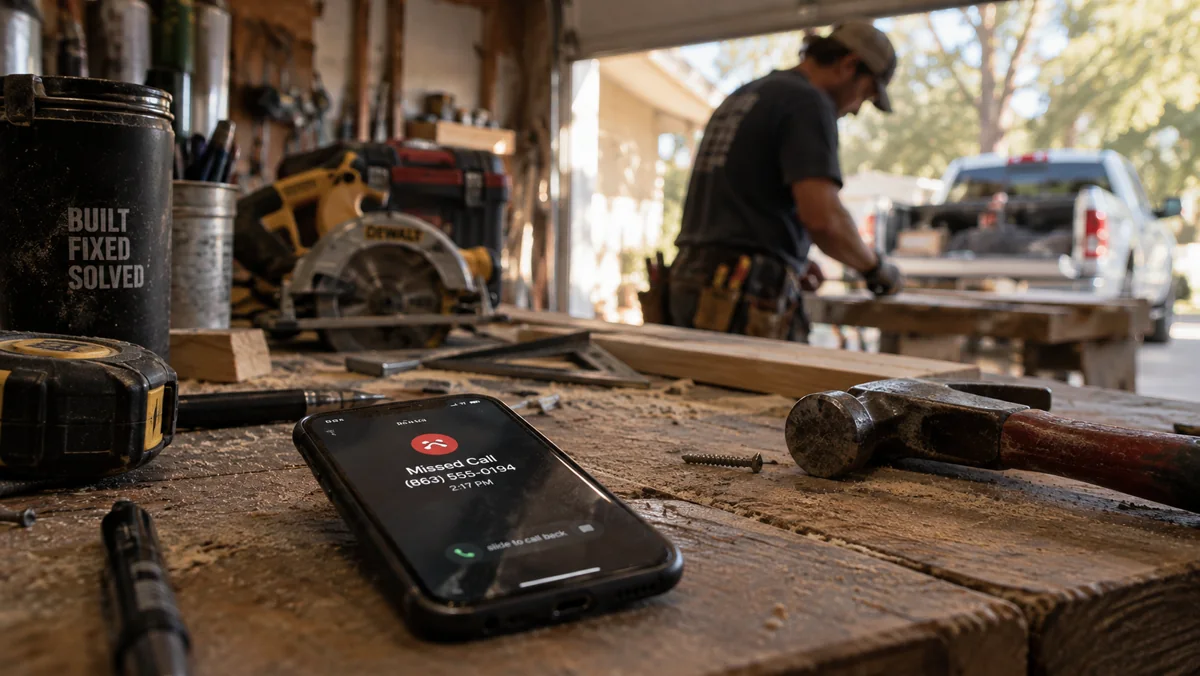
79% of home services leads never convert into a booked job. Most owners look at that number and blame the lead source. Bad list, wrong platform, low intent.
Usually that's not it. Usually it's a clock problem, not a lead problem, and almost nobody is actually timing it.
What does the “five-minute rule” actually measure?
You've probably seen some version of the "5-minute rule": respond to a new lead within 5 minutes or your odds of closing it collapse. It gets repeated so often it starts to sound like generic sales-team motivation, but it isn't — the original research behind it is specific and the numbers are brutal. MIT's Lead Response Management study (Dr. James Oldroyd) found that a business responding within 5 minutes is 100 times more likely to make contact with that lead than one that waits 30 minutes, and 21 times more likely to actually qualify it. Harvard Business Review's follow-up work found an 80% drop in lead quality after the first 5 minutes pass, and Velocify's research on 1-minute response found a 391% improvement in conversion versus slower follow-up. None of that is about being polite; it's about the homeowner's behavior. Most people requesting a quote for a roof, an HVAC repair, or a remodel aren't calling one company — homeowners routinely contact more than one business for the same job, and the company that responds first gets a real structural advantage before anyone starts comparing price or reading reviews. Speed decides who's even in the conversation.
What is “cost per lead” actually hiding?
Here's where the math actually bites. Say your blended cost per lead runs around $92, which is roughly the industry average for home services right now. If you respond in 5 minutes and qualify 21 out of every 100 leads, your real cost per qualified lead is a shade under $440. Now run the same $92 lead through a 30-minute response time: same lead, same list, same marketing spend, except now you're only qualifying 1 out of 100, and your real cost per qualified lead just jumped to $9,200. That's not a rounding error. That's the entire economics of your lead generation program, decided by a delay you probably aren't measuring. One industry analysis put it more starkly: a $50 lead answered at 30 minutes instead of 5 effectively has its value reduced to under $2.50. You didn't get a worse lead. You got the same lead, twenty-one times poorer, because of how long it sat in an inbox.
The qualification-rate gap between a 5-minute and a 30-minute response time on an identical lead, per MIT's Lead Response Management research.
If you can't answer how long your leads actually sit before first contact, you don't have visibility into the single biggest lever in your funnel.
Why is the average home services business losing this fight?
It would be one thing if this were a rare failure mode. It isn't. One analysis of over 132,000 home services outreach campaigns found that 88% of users took longer than 5 minutes to respond to a new lead. The single most common response time in that dataset wasn't 5 minutes, or even 30 — it was a full day later. Only 3% of businesses hit the under-1-minute mark that produces the best numbers. Part of the reason is structural, not a discipline problem: roughly 40–60% of home services leads come in outside business hours — evenings, weekends, the exact windows when a one-person office or a two-truck crew has nobody staffed to answer a phone or reply to a form submission. One analysis of after-hours behavior found teams going dark for approximately 61 hours straight from Friday to Monday, and 77.3% of businesses that respond slowly after hours report losing leads specifically because of it. So the pattern isn't "contractors don't care about speed." It's that speed requires either staffing hours nobody wants to staff, or a system that doesn't depend on a human being awake and at a desk the second a form comes in.
How does the math in this article actually work?
None of the numbers above require you to trust a black box. At a $92 blended cost per lead, qualifying 21 out of 100 leads means you spent $9,200 to produce 21 qualified conversations, or $438 per qualified lead ($9,200 ÷ 21). Drop to a 1-in-100 qualification rate on the same spend and that same $9,200 buys you a single qualified lead. Same $92 leads, same total spend, radically different result — because the only thing that changed is how long they sat before someone called.
| Response time | Qualification rate | Real cost per qualified lead |
|---|---|---|
| Within 5 minutes | 21% | ~$438 |
| After 30 minutes | ~1% | ~$9,200 |
This is the whole argument in one line: cost per lead is a number the platform controls. Cost per qualified lead is a number your response time controls. Only one of them is something you can fix this week.
Does staffing after hours actually pay for itself?
The staffing objection is real: paying someone to answer calls at 9pm on a Saturday feels expensive for a business that might only book one job from that evening's leads. Run the numbers before deciding against it. If a single qualified lead is worth roughly $438 in cost-avoidance terms based on the math above, and an average ticket in your trade is worth even a fraction of a typical home service job, covering a handful of extra evening hours a week rarely costs more than the value of the one job it saves from going to whichever competitor did answer. The question isn't whether after-hours coverage is free. It's whether it's cheaper than the jobs you're currently losing to silence.
How do you run your own numbers?
Before you touch anything about your marketing spend, three questions will tell you more than almost any other diagnostic:
- What's your average time from lead-in to first call, measured, not guessed? Most owners estimate this generously. Pull it from your CRM or call logs instead of estimating.
- What percentage of leads do you reach on the first attempt? Not "eventually reach" — first attempt, because that's the number tied to the 5-minute math above.
- Of the leads you do reach, what's your actual close rate? This is the number that reveals whether your sales process or your speed is the real bottleneck.
One home services company that improved its response rate from 20% to 80%, without changing lead volume or spend at all, saw booked appointments roughly quadruple. That's not a new marketing channel. That's the same leads, answered.
Why isn't the fix just more leads?
The instinct when conversion looks weak is to buy more leads. Usually that just multiplies the same leak: if your real cost per qualified lead is running $9,000 because of a 30-minute response gap, doubling your ad spend doubles how much money passes through that same gap. The actual fix is smaller and less glamorous: a system that gets a real response — not an autoresponder, an actual qualifying conversation — in front of a homeowner inside the first five minutes, every time, including nights and weekends, without requiring you personally to be holding a phone at 9pm on a Saturday. That's the layer Closer Growth builds around the leads we deliver: qualification and fast, exclusive delivery designed around the fact that speed decides who wins the job more often than price or reputation does. If you want to see what your own speed-to-lead number is actually costing you, start with a low-cost 3-day trial and run the math yourself. That's the only comparison that matters.
Common questions
What does the “five-minute rule” actually measure?
The five-minute rule is backed by MIT's Lead Response Management study, which found that responding to a lead within 5 minutes makes a business 100 times more likely to reach the homeowner than waiting 30 minutes, and 21 times more likely to qualify it. Harvard Business Review found an 80% drop in lead quality after the first 5 minutes, and Velocify found a 391% conversion improvement from 1-minute response. The underlying reason is that homeowners routinely contact more than one company for the same job, so whoever responds first gets a structural advantage before price or reviews even enter the conversation.
What is “cost per lead” actually hiding?
The advertised cost per lead hides how dramatically response time changes the real cost per qualified lead. At a $92 blended cost per lead, responding within 5 minutes and qualifying 21 out of 100 leads puts the real cost per qualified lead at roughly $440, but the same $92 lead answered after 30 minutes qualifies at only 1 out of 100, pushing the real cost to $9,200. The lead itself didn't change — only how long it sat before someone called.
Why is the average home services business losing this fight?
One analysis of over 132,000 home services campaigns found 88% of businesses took longer than 5 minutes to respond to a new lead, with a full day being the single most common response time and only 3% hitting the ideal under-1-minute mark. Much of this is structural rather than a discipline problem, since roughly 40-60% of leads arrive outside business hours when a small office or crew has nobody staffed to answer. Teams often go dark for around 61 hours from Friday to Monday, and most businesses that respond slowly after hours report losing leads specifically because of it.
How does the math in this article actually work?
The math is straightforward: at a $92 blended cost per lead, qualifying 21 out of 100 leads means $9,200 in spend produces 21 qualified conversations, or about $438 per qualified lead. Drop to a 1-in-100 qualification rate on the same $9,200 spend and it buys only a single qualified lead. The total spend and the leads themselves stay identical — the only variable that changes the result is how long they sat before someone called.
Does staffing after hours actually pay for itself?
Staffing after hours can pay for itself once the real cost-avoidance math is run, since a single qualified lead saved from going dark is worth roughly $438 based on the 5-minute response math. Covering a handful of extra evening or weekend hours a week typically costs less than the value of even one job that would otherwise go to a competitor who did answer. The real question isn't whether after-hours coverage is free, but whether it's cheaper than the jobs currently being lost to silence.
How do you run your own numbers?
Three measured numbers reveal more than any other diagnostic: average time from lead-in to first call pulled from a CRM or call log, the percentage of leads reached on the first attempt, and the actual close rate among leads that are reached. One home services company that improved its response rate from 20% to 80%, without changing lead volume or spend, saw booked appointments roughly quadruple — proof that the same leads, answered faster, produce dramatically different results.
Why isn't the fix just more leads?
Buying more leads usually just multiplies an existing leak — if the real cost per qualified lead is running high because of a response-time gap, doubling ad spend simply doubles how much money passes through that same gap. The actual fix is a system that delivers a real qualifying conversation to a homeowner inside the first five minutes, every time, including nights and weekends, without requiring the owner to personally hold a phone at 9pm on a Saturday. Closer Growth builds that qualification and fast, exclusive delivery layer around the leads it provides.
Sources: MIT / InsideSales.com Lead Response Management Study (Dr. James Oldroyd); Velocify Research; Hatch analysis of 132,188 home services campaigns.
Ready to fill your pipeline?
Start with a low-cost 3-day trial. Exclusive homeowner leads delivered to your pipeline before you commit to a plan.
Book your strategy call